What Separates a Reliable Software Development Partner From a Risky One
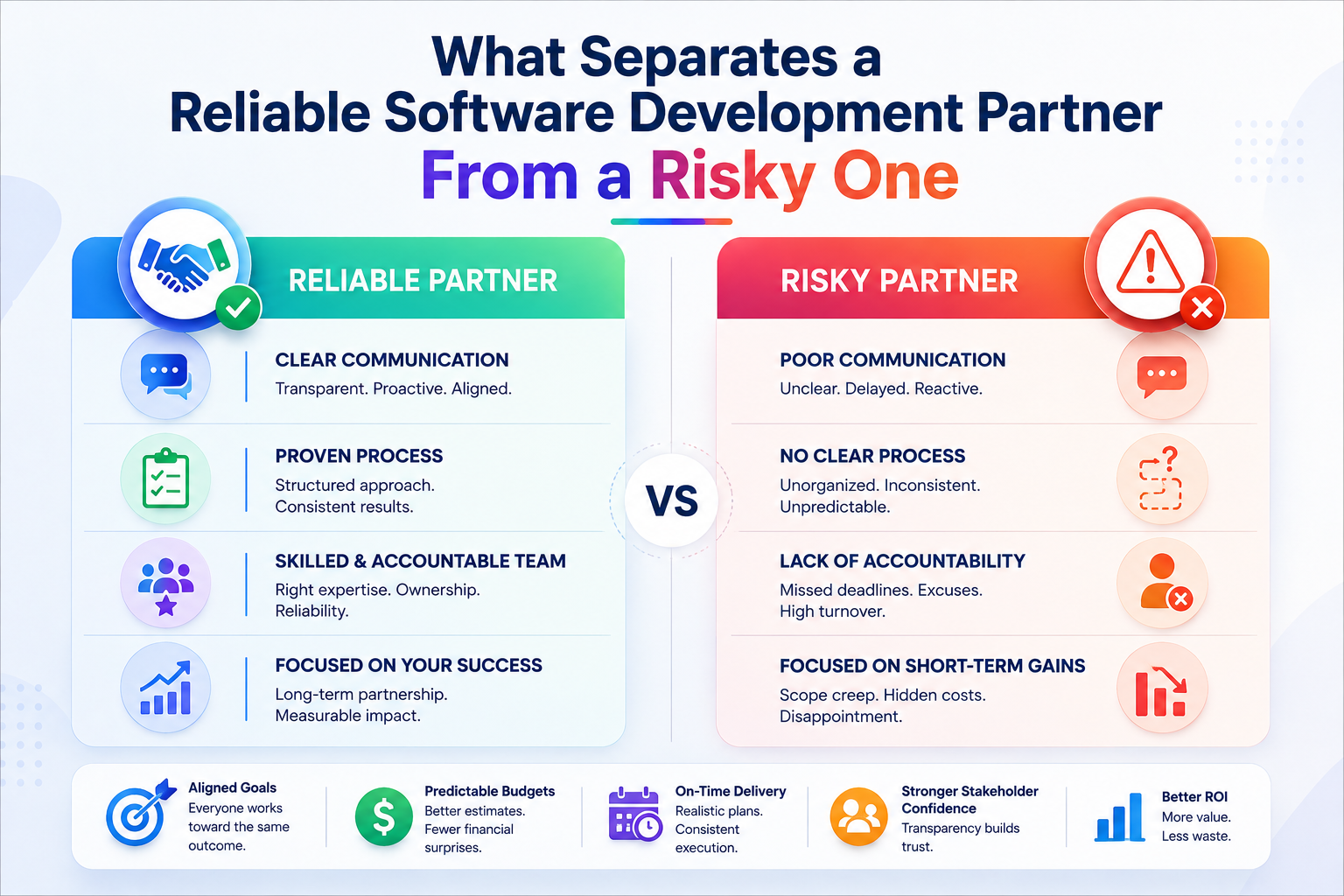
Most advice on choosing a software vendor focuses on portfolios and reviews. Those matter, but they do not reveal how a project will actually feel six weeks in, once requirements shift and deadlines tighten. What separates a dependable partner from a risky one shows up in a handful of specific, observable patterns.
How They Handle Change
Requirements always change, on every project, without exception. A vendor who claims they will not, or who has no clear process for handling it, is either inexperienced or not being fully honest. A reliable partner has an actual process: how changes get scoped, communicated, and priced, explained plainly before a contract is signed.
Who Actually Does the Work
The person who sells the project is not always the person who builds it. A trustworthy partner is direct about who the day-to-day point of contact will be once work begins, and gives real access to the people doing the work rather than routing everything through an account manager relaying messages.
How They Communicate Progress, Not Just Results
A portfolio shows finished work. It does not show what the weeks before that looked like. The firms worth working with can describe, concretely, how they report progress, whether through regular demos, written updates, or direct access to a project board. Long silence between milestones is one of the most common warning signs on a software project, and a serious partner will already have a system to prevent it.
What Happens After Launch
A surprising number of vendors treat launch as the finish line. A dependable partner is specific about what support looks like afterward: how bug fixes are handled, how security patching works, and how quickly issues get addressed. Vagueness here usually means budgeting for a second vendor later.
Who Owns the Code
This should never be a complicated answer: the client does. If a vendor hesitates, or if access to the codebase and hosting accounts is unclear, that is a real risk, not a minor detail to sort out later.
How They Talk About What Went Wrong
Anyone can describe their successes well. How a team talks about a project that went sideways reveals far more about how they will handle problems on the next one. A partner who claims nothing has ever gone wrong on any project is not being credible.
Whether They Will Tell You "No"
A development partner who is honest will tell a client when they do not need a custom build. If every conversation leads to "yes, you should build this," regardless of what is actually described, that is a sales incentive talking, not technical judgment.
The right partner is not the one with the most polished pitch. It is the one whose answers hold up when you ask for specifics instead of reassurance.
We would rather earn a project by being direct about all of this upfront than by avoiding it until after a contract is signed.