The Anatomy of a Successful Software Partnership

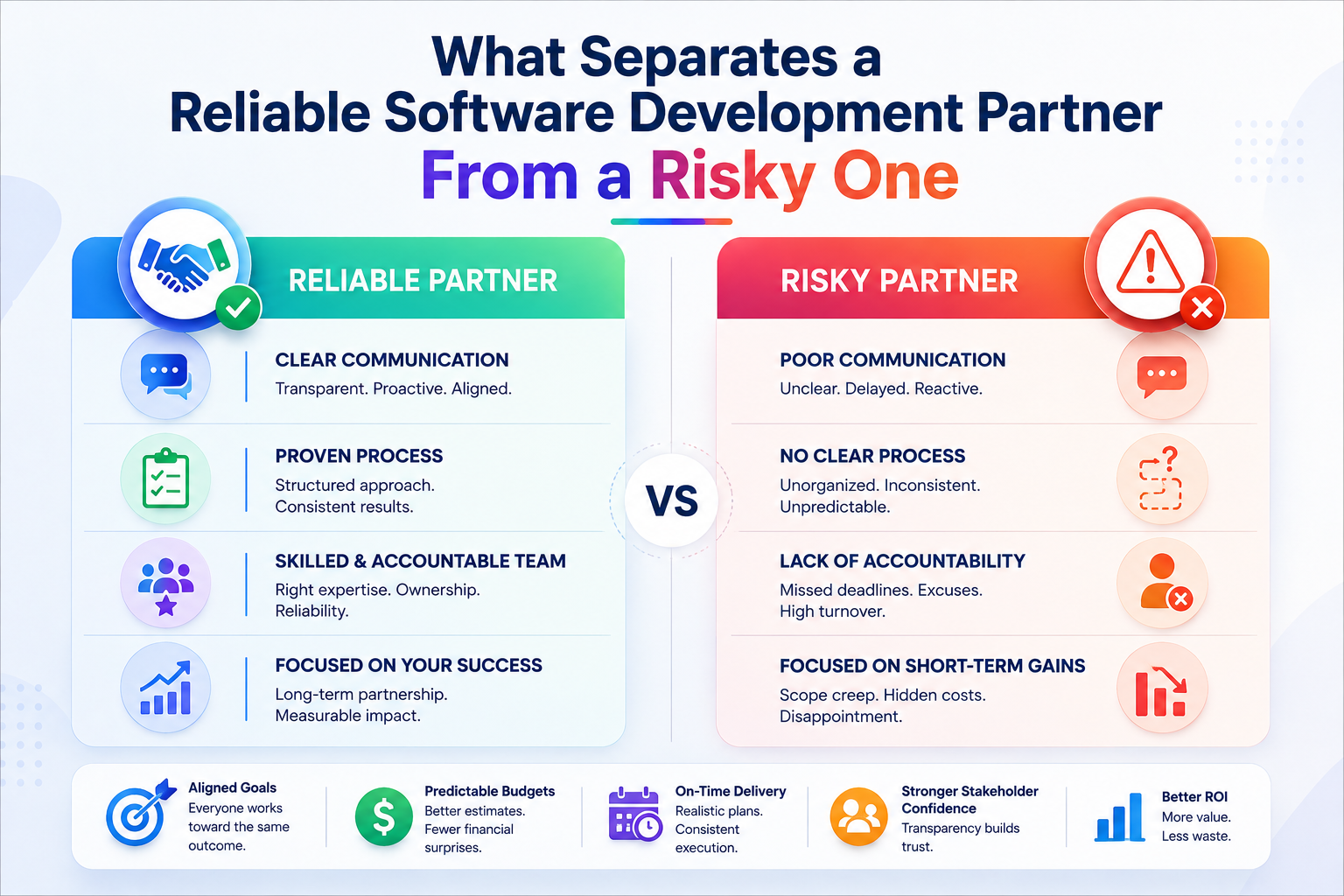
After enough projects, a pattern becomes clear: the difference between a software project that goes well and one that does not is rarely about which technology was chosen. It is almost always about the working relationship between the client and the team building it.
A Single, Accessible Point of Contact on Both Sides
Projects move faster and with fewer misunderstandings when there is one clear person on the client side who can make decisions, and one clear person on the development side who can answer questions directly, without either side routing everything through layers of intermediaries.
Decisions Made on a Real Timeline
Software development has natural decision points: approving a design direction, confirming a workflow, signing off on a feature before moving to the next one. Partnerships that go well treat these as real deadlines, not optional check-ins to get to eventually. Delayed decisions are one of the most common, and most avoidable, sources of timeline slippage.
Feedback That Is Specific
"This does not feel right" is feedback a team cannot act on. "The form should ask for this information before that one, because that is the order clients actually provide it" is feedback that improves the product immediately. The clients who get the best results are not necessarily the most technical, they are the ones who describe problems concretely rather than impressionistically.
Trust Built Through Visibility, Not Just Assurance
Strong partnerships are not built on a team simply saying "trust us, it is going well." They are built on actually showing progress regularly, through demos, working software, or a visible project board, so trust is based on evidence rather than reassurance.
A Shared Understanding of What "Finished" Means
Some of the most frustrating project endings happen when the client and the development team had quietly different definitions of done. Successful partnerships nail this down early and revisit it explicitly whenever scope shifts, rather than assuming it stays implicitly understood throughout the project.
The technology is rarely what makes a software project succeed or fail. The relationship around it almost always is.
We try to build every engagement around these habits from the first conversation, not just after a project has already started to go sideways.