Collect, Analyze, Secure: Data Collecting Strategies for the Digital Age
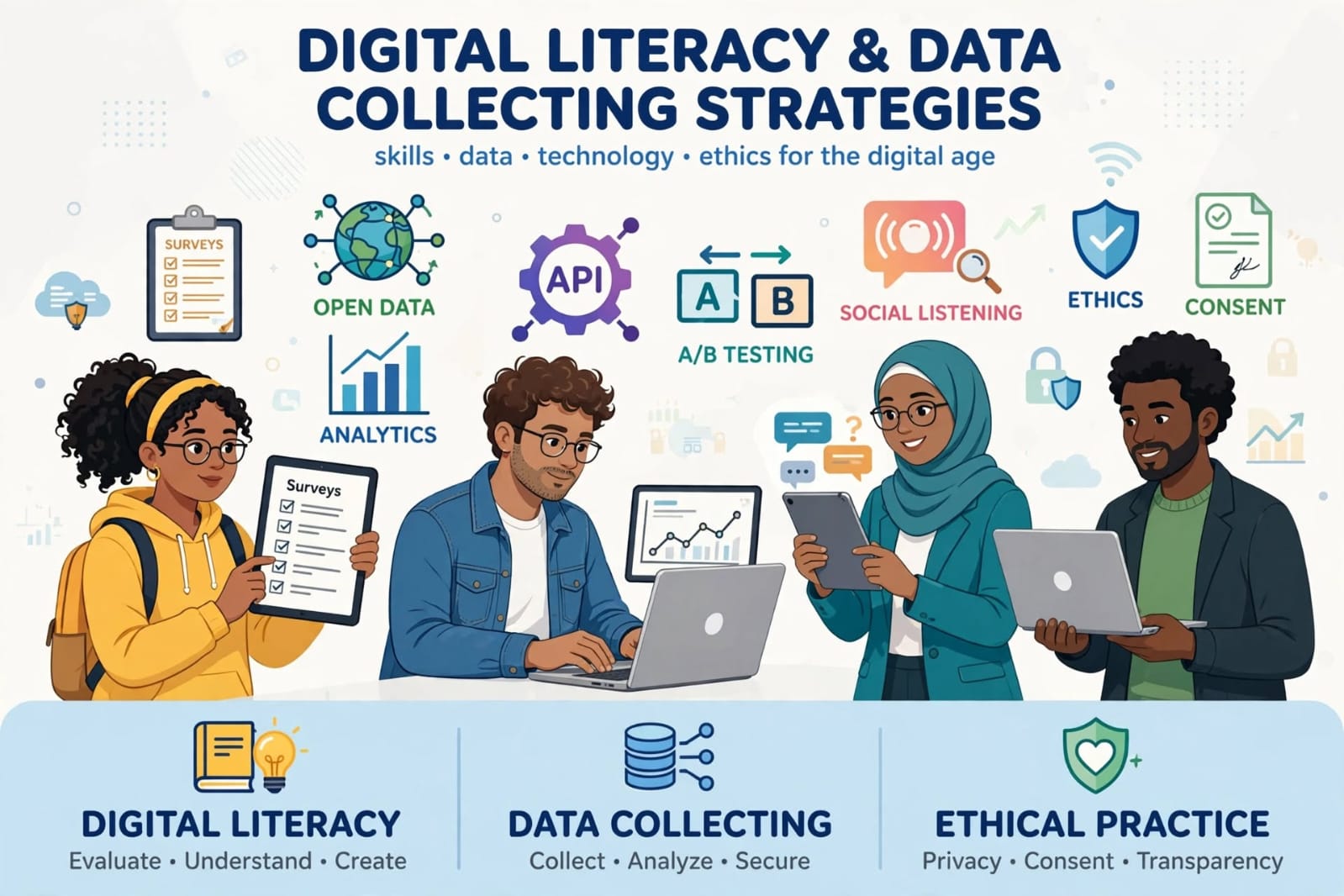
Digital literacy is no longer just knowing how to use a laptop or an app. A truly digitally literate person understands where data comes from, how it is gathered, and how to judge whether that gathering is ethical, accurate, and useful.
In a digital context, data collecting strategies are the methods we use to capture information from online and offline environments using digital tools. Here is what they look like in practice.
What Data Collection Means for Digital Literacy
In the past, collecting data meant clipboards and field notes. Today it means forms, trackers, sensors, and databases. Digital literacy connects three skills:
1. Technical skill: Can you use the tool?
2. Critical skill: Do you understand what the tool is actually capturing and what it is missing?
3. Ethical skill: Do you have permission, and do you protect people's privacy?
Without all three, you might collect data efficiently but irresponsibly.
6 Data Collecting Strategies for the Digital Age
1. Digital Surveys and Online Forms
Platforms like Google Forms, Microsoft Forms, Typeform, and SurveyMonkey have made surveys the most accessible digital method.
Digital Literacy Angle:A good digital citizen knows how to design mobile-friendly questions, avoid leading language, use logic branching, and prevent ballot stuffing. More importantly, they know to check who was not able to answer. If you only share a survey on Instagram, you are excluding people who are not on Instagram.
Best for: Measuring attitudes, digital skills, user satisfaction.
2. Observation of Digital Behavior
This is not watching people in a store. It is observing how people act online — click paths, time on page, scroll depth, navigation patterns, and interaction with content.Tools like Hotjar, Microsoft Clarity, or built-in analytics on LMS platforms let you see heatmaps and session recordings.
Digital literacy angle: Understanding that observation can be invisible. Being literate means knowing that your own clicks are being observed, and when you are the observer, you must anonymize data and get consent.
3. Transactional and System-Generated Data
Every digital action leaves a trace: LMS logins, e-commerce purchases, search history, library checkouts, Wi-Fi connections. This is called exhaust data.
Digital literacy angle: Learning to work with data you already have. Instead of creating a new survey, can you answer your question from system logs? This requires skills in data cleaning, dashboards, and understanding databases. It also teaches a key literacy lesson: data is never raw. It was shaped by how the system was designed.
4. Social Listening and Content Analysis
Public posts, comments, reviews, hashtags, and forum discussions are a rich source of qualitative data.Tools range from simple advanced search on X, Reddit, or TikTok to more structured tools like Google Alerts or Brandwatch.
Digital literacy angle: This is where source evaluation becomes critical. Who posted it? Is it a bot? What is the context? Digitally literate collectors don't just scrape quotes — they verify authenticity, understand platform algorithms, and avoid taking a viral post as representative of everyone.
5. Open Data and Third-Party APIs
You don't always need to collect new data. Governments, NGOs, and companies publish open datasets — from World Bank indicators to NASA climate data to your city's transport data. APIs let you pull live data from legitimate sources.
Digital literacy angle: This teaches reuse, attribution, and critical assessment. Is the dataset current? Who funded it? What methodology was used? Knowing how to read documentation and cite a dataset is a core digital literacy skill.
6. Experimental Collection: A/B Testing and Digital Crowdsourcing
Digital platforms make experimentation easy. You can show two versions of a message, a website banner, or a learning activity and see which performs better. Crowdsourcing platforms like Ushahidi, OpenStreetMap, or citizen science apps let communities contribute data together.
Digital literacy angle: It moves learners from consumers to creators of knowledge. They learn to formulate a hypothesis, control variables, and interpret results without overclaiming causality.
The Ethical Layer: What Makes Collection Literate
Every digital strategy must pass four checks that should be taught alongside the tools:
1. Consent: Is it informed and revocable? A pre-ticked box is not consent.
2. Minimization: Are you collecting only what you need for your stated purpose?
3. Security: Where is the data stored, who can access it, and how long will you keep it?
4. Transparency: Can you explain in plain language what you collect and why?
A common classroom exercise is a data audit: ask students to list all the data their favorite app collects by reading its privacy policy and permissions. It is eye-opening and builds critical literacy instantly.
In the end, data collecting strategies in digital literacy are not about mastering every tool. They are about choosing the right method for your question, using it skillfully, questioning its limits, and respecting the people behind the data points.