What Belongs in a Modern Law Firm's Technology Stack
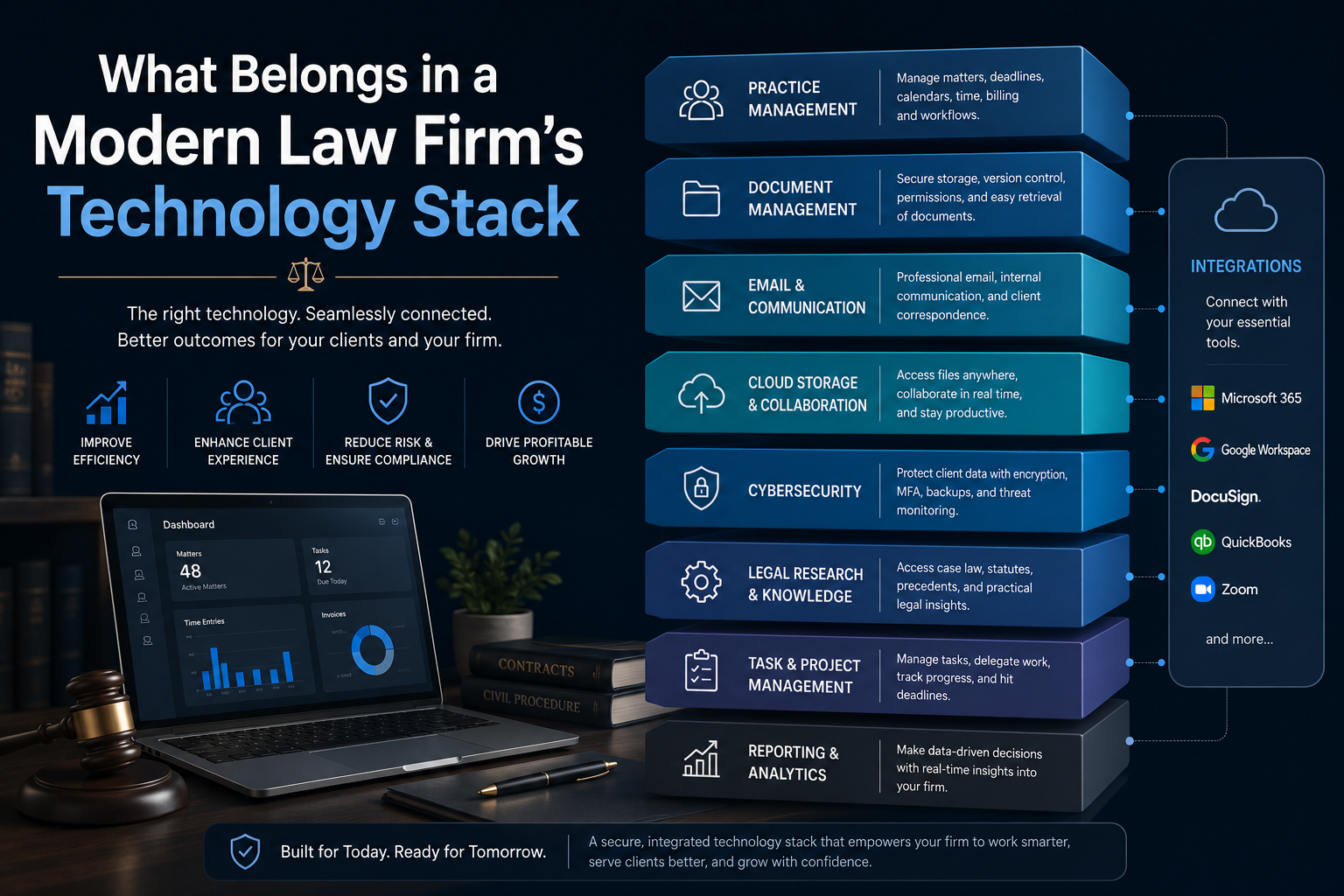
Legal technology has expanded fast enough that most firms now face a different problem than they did a decade ago. The question is no longer "should we adopt technology," it is "which of the many options are actually worth the investment." Some tools earn their place. Many do not.
The Core: Case and Client Management
This is the foundation everything else sits on. A system that holds client records, case timelines, hearing schedules, and document history in one searchable place is not optional infrastructure, it is the difference between a firm that can answer a client question in seconds and one that cannot answer it without a round of internal emails.
Document Automation, Used Selectively
Automating repetitive document generation, standard contracts, routine filings, intake forms, saves real time, but only for documents that are genuinely repetitive. Firms sometimes over-invest here, automating documents that needed customization anyway, which adds complexity without adding much real efficiency.
Secure Client Communication
Email was never designed for the level of confidentiality legal work requires. A dedicated, secure channel for client communication, tied to the case record rather than a personal inbox, closes a real risk that many firms have simply gotten used to living with.
Calendaring That Cannot Be Missed
Deadline and hearing tracking that depends on one person remembering to update a shared calendar is a structural risk, not a minor inconvenience. This needs to be a system feature, visible to everyone who needs it, not a habit resting on one person's diligence.
Where Firms Tend to Overspend
The tools that tend to underdeliver are the ones adopted because they were trending rather than because they solved a specific, named problem at the firm. Generic "AI legal assistant" tools and broad practice-area-agnostic platforms often look impressive in a demo and add little once the novelty wears off, particularly if they do not integrate cleanly with the firm's actual case records.
The Test Worth Applying to Any New Tool
Before adopting anything, it is worth asking specifically: what task does this remove entirely, not just speed up slightly, and does it reduce the number of places where client and case information lives, or add another one. Tools that pass both tests tend to be worth it. Tools that only pass the first, often are not.
A modern legal tech stack is not the firm with the most tools. It is the firm where every tool earns its place by removing a specific, recurring source of friction.
This is the thinking behind our Lawyer Management System: fewer disconnected tools, one system built specifically around how firms actually run cases day to day.