The Real Cost of Custom Software Development: A Practical Breakdown

"How much will this cost?" is the first question almost every client asks us, and it is a fair one. The honest answer is: it depends, but not in the vague way that phrase usually implies. There are specific, predictable factors that determine cost, and once you understand them, you can budget realistically instead of guessing.
The Three Things That Actually Drive Cost
Most quotes vary because of three factors, not because developers are pulling numbers out of thin air:
- Scope and complexity: A simple internal tool with a handful of screens costs a fraction of a multi-role platform with permissions, integrations, and reporting.
- Integrations: Connecting to payment gateways, existing databases, third-party APIs, or legacy systems adds real engineering time that is easy to underestimate.
- Polish and performance requirements: A back-office tool used by five employees has very different design and performance expectations than a customer-facing app used by thousands.
Rough Ranges (And Why "Rough" Matters)
Without knowing your specific requirements, any number is a guess. But to give you a sense of scale:
- A focused internal tool or admin panel: typically the smallest investment, often deliverable in weeks.
- A client-facing web application with user accounts, a few core workflows, and basic reporting: a mid-range project, usually measured in a few months.
- A platform like a security operations system or a full practice management suite, with multiple modules, role-based access, and ongoing data: the largest investment, built and refined over multiple phases rather than one release.
If a vendor gives you a firm number before understanding your workflows, treat it with caution. A real estimate follows a scoping conversation, not the other way around.
The Hidden Cost Nobody Mentions: Maintenance
The build is not the end of the cost conversation. Software needs security patches, server costs, and small adjustments as your business changes. Budget for this from day one rather than being surprised by it six months after launch.
How to Get an Accurate Number
The fastest way to get a real estimate is to come prepared with:
- A list of the core workflows the software needs to support (not every feature you can imagine, just what is essential to launch)
- Any systems it needs to talk to
- Roughly how many people will use it and in what roles
With that, a serious development partner can give you a scoped estimate within a few days, not a guess pulled from a generic price list.
The right question is not "what does software cost" but "what does solving this specific problem, for my specific business, cost." Everything else is a placeholder number.
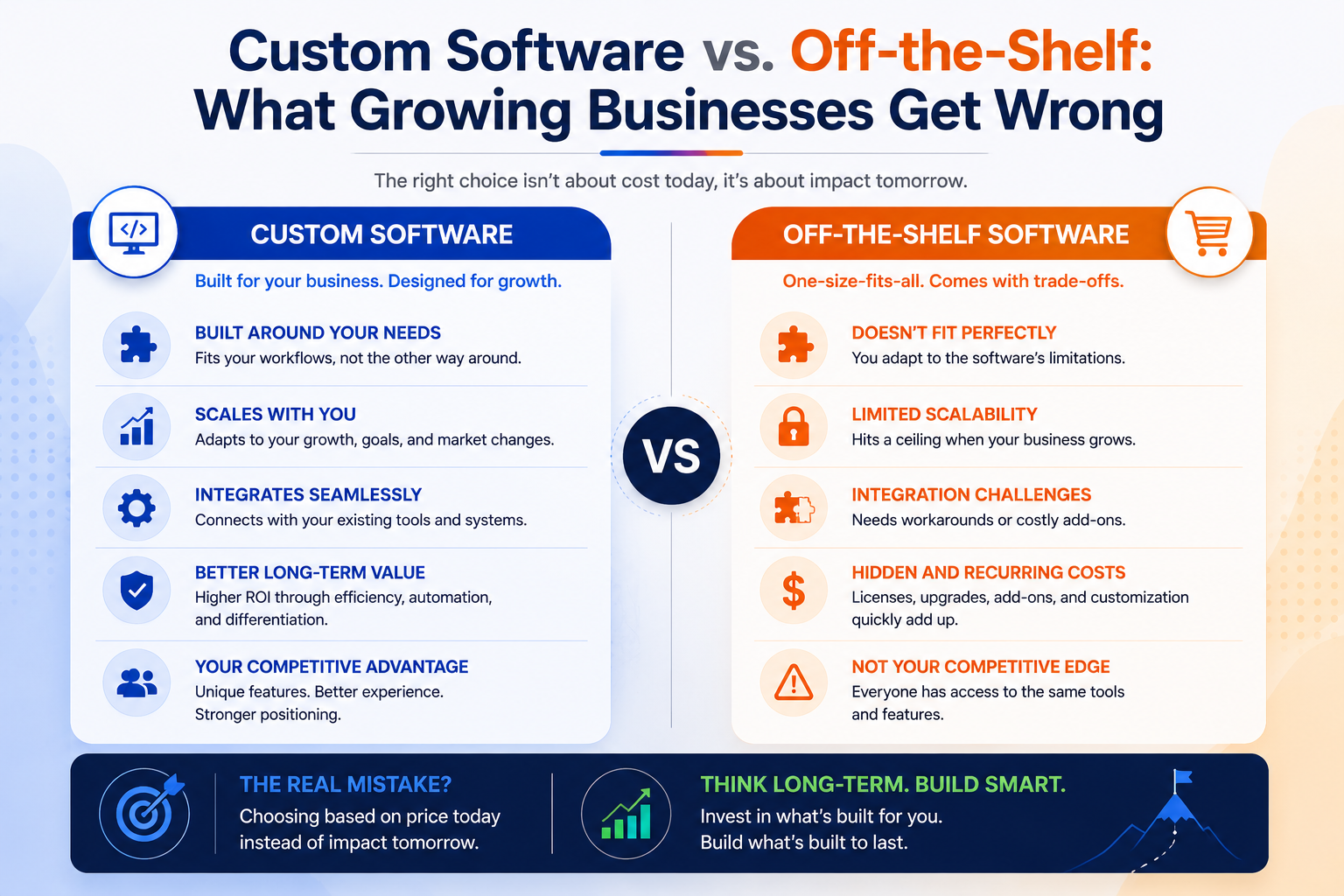
If you are weighing whether to build something custom or buy an off-the-shelf tool, that is worth its own conversation; we cover it in a separate post. If you already know you need something built, we are happy to scope it with you and give you a real number, not a placeholder.